H
hairtech
member
This is an important part of a hair transplant surgery. It is overlooked in most all of my own experience with the exception of the last two clinics I have worked for.
The depth at which the grafts need to sit within the recipient area must be measured. If the physician makes the depth too deep then the graft could be potentially buried... causing pitting or cobble stoning. If the depth is too shallow, then the graft could potentially be smashed or curled. What is also worth noting is that most experienced technicians will know there is a depth issue and communicate that to the physician. Then he or she can make an adjustment. I can almost guarantee that this simple part of this procedure is overlooked by larger hair mill clinics.
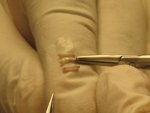
This picture depicts a physician measuring the graft against a blade that makes sites for the graft.
The depth at which the grafts need to sit within the recipient area must be measured. If the physician makes the depth too deep then the graft could be potentially buried... causing pitting or cobble stoning. If the depth is too shallow, then the graft could potentially be smashed or curled. What is also worth noting is that most experienced technicians will know there is a depth issue and communicate that to the physician. Then he or she can make an adjustment. I can almost guarantee that this simple part of this procedure is overlooked by larger hair mill clinics.
This picture depicts a physician measuring the graft against a blade that makes sites for the graft.