
Understanding Hair
Valued member
Shock loss is the term to describe the shedding of the native hair after a hair transplant. Shock loss can be permanent or temporary in the recipient or donor areas. If temporary commonly regrowing over a six-month period. However, the hair may not grow back or may regrow weaker and patchy compared to before. It can occur indiscriminately, for no obvious reason, however, the risk of shock loss can certainly be increased by a clinic.
Shock loss should not be considered a common side effect of a hair transplant, many clinics go a year or more without a single patient suffering, even then often minimal loss. However, in recent years there has been in increase in online documented aggressive shock loss cases, specifically FUE donor shock loss. This increase in documented cases of FUE donor shock loss, is not throughout all clinics, as a result should be examined as to the potential reasons why shock loss is more likely for some. Potential causes of shock loss can be, aggressive graft placement, or placing into diffuse thinning, causing tissue trauma, but this will focus on the FUE donor region.
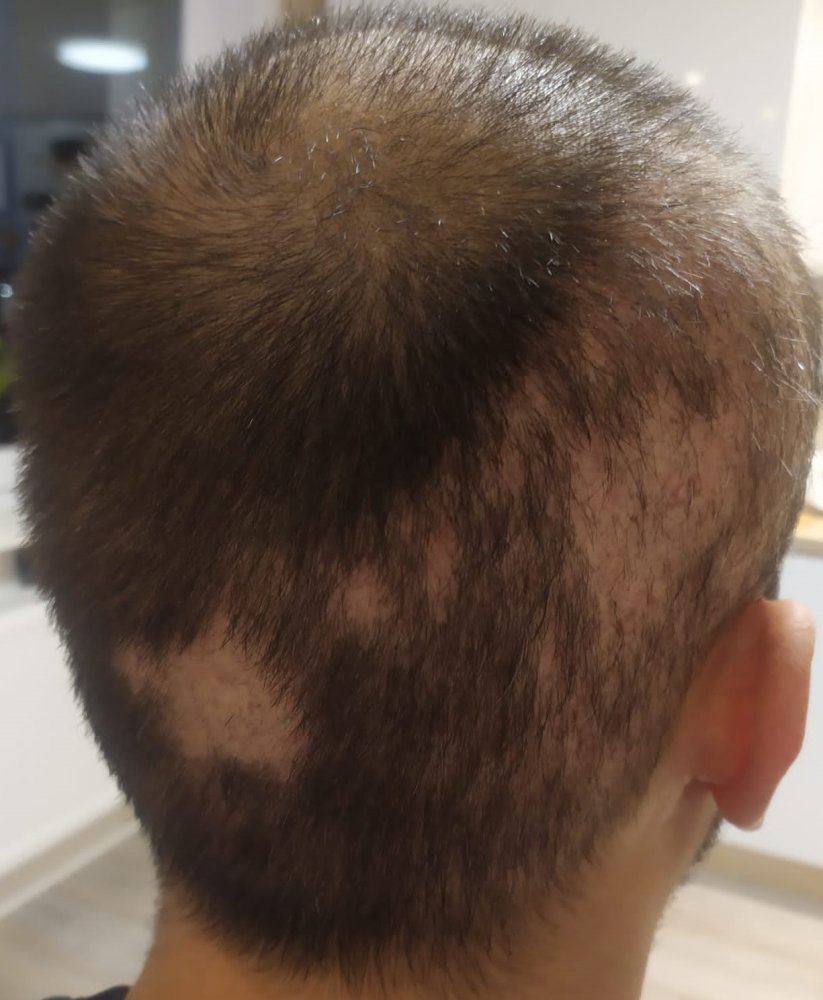 Aggressive donor harvesting, FUE reduces the hair density around the back and sides of the head, the more hair removed in one procedure can also cause damage to surrounding hair, this can increase the risk of shock loss. Ironically with over harvesting, it can make it hard to decide whether the loss of hair around the donor is shock loss or removing too much, highly likely a combination of both, only time will tell. With no donor harvesting protocol, or sensible cap on the graft numbers, including who and how the grafts are harvested, the risk of shock loss only increases. Often multiple individuals with no medical qualification, all working the donor simultaneously, with little to no understanding of anatomy, simply trying to reach the numbers quickly. The increased use, dose or strength of medication used can also cause trauma to the area, this can spread to the untreated areas. If the donor hair has a mix of terminal quality hair and weaker, maybe miniaturised, or naturally finer hairs, shock loss is more prone to affect these hair characteristics.
Be it the intensity of medications, or the aggressive performing of the procedure, all can potentially cause excessive trauma to the skin, insufficient blood flow and ultimately shock loss. If you decide to use a clinic with a history of shock loss there is nothing you can really do to minimise the risk of it occurring to you.
(Taken from a clinic website “Called “shock loss”, this condition affects 60 to 80% of transplant patients.”).
Clinics often suggest starting minoxidil beforehand to reduce the risk, but minoxidil should be stopped prior to the hair transplant anyway. Also used after to try and encourage the hair regrowth. While there is no proven way to reduce the risk of shock loss following a hair transplant there are ways to minimise the risk, choose a clinic that does not consider shock loss as a normal occurrence. Big red flag if they do see it as a likely reaction. Talk with the doctor about shock loss, choose a clinic that has strict protocols on aspects such as donor management, harvesting protocols, grafts numbers per session, and who performs the graft extraction. Always try to talk with clients on how their recovery went.
Shock loss should not be considered a common side effect of a hair transplant, many clinics go a year or more without a single patient suffering, even then often minimal loss. However, in recent years there has been in increase in online documented aggressive shock loss cases, specifically FUE donor shock loss. This increase in documented cases of FUE donor shock loss, is not throughout all clinics, as a result should be examined as to the potential reasons why shock loss is more likely for some. Potential causes of shock loss can be, aggressive graft placement, or placing into diffuse thinning, causing tissue trauma, but this will focus on the FUE donor region.
Be it the intensity of medications, or the aggressive performing of the procedure, all can potentially cause excessive trauma to the skin, insufficient blood flow and ultimately shock loss. If you decide to use a clinic with a history of shock loss there is nothing you can really do to minimise the risk of it occurring to you.
(Taken from a clinic website “Called “shock loss”, this condition affects 60 to 80% of transplant patients.”).
Clinics often suggest starting minoxidil beforehand to reduce the risk, but minoxidil should be stopped prior to the hair transplant anyway. Also used after to try and encourage the hair regrowth. While there is no proven way to reduce the risk of shock loss following a hair transplant there are ways to minimise the risk, choose a clinic that does not consider shock loss as a normal occurrence. Big red flag if they do see it as a likely reaction. Talk with the doctor about shock loss, choose a clinic that has strict protocols on aspects such as donor management, harvesting protocols, grafts numbers per session, and who performs the graft extraction. Always try to talk with clients on how their recovery went.
Last edited: