• Welcome to Hair loss Experiences hair loss forum.

    Free impartial hair loss advice, hair transplant advice, hair loss medications and hair loss news.
    You can contact us directly at [email protected] if you experience any problems.

Very uneven growth after 8 months post FUE

B

Bunty81

member
Hi guys

Had an FUE procedure done back in May 2022 for roughly 2000 grafts in the front/temple area. I'm 41 now and was around a norwood 3 - 4 prior to surgery. My hair loss had pretty much ground to a halt by the time I was 30 so thought I'd be a good candidate for it. I was also on no meds for hair loss prior to surgery.
The procedure was performed without any issues as far as I am aware, and all seemed to be in order for the first few months or so. I began using topical 5% minoxidil at around month 2 and continue to use it today. I have not touched finasteride, and neither do I intend to (tried it during my late 20s and experienced side effects).

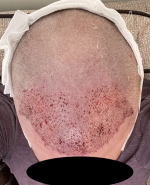
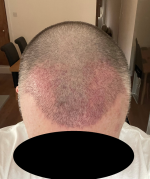
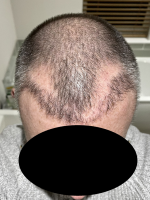
My concerns started to surface at around the 4 month mark, where it started to become clear that large areas towards the mid-scalp area we showing no growth at all, as well as a smaller area at the front towards the hairline. However I assumed that there was still no need to worry as it was still fairly early in the game.

2 months later my concerns started to grow considerably, as nothing seemed to be changing at all (there were a few sporadic hairs growing in the problematic areas but no where near what it should be at 6 months).

It is now 8 months since the procedure and still not a lot has changed at all, so I'm starting to believe that a considerable number of grafts have just not taken.

I went to see the surgeon today (first time since the procedure) to discuss my concerns, and he told me he'd never seen a situation like this before. He has however offered to do a second procedure for free, but I'm still debating whether to go ahead with it. To be honest I expected him to tell me to wait til at least 12 months post OP before performing a second procedure, but I guess he believes it's a failure too? Clinic is based in the UK, however I will not be revealing the name at this stage as I don't wish to burn any bridges.

So what do you guys think? Seen anything like this before? Any ideas as to the lack of growth in such large areas?

Thanks for reading.

Note - Yes I've been keeping my hair short from around week 10 (number 2 guard). I've tried growing it out but it looks so bad I can't do it.

Pre OP -
BeforeProc.png
Post OP -
AferProc.png
After scab removal (9 days) -
10 Days.png
4.5 months -
4.5 Months.png
6 months -
6 months.png
8 months -
8 months.png
 
Kevboy

Kevboy

Valued member
It looks as though something has gone wrong that has resulted in either slow or no growth in the area directly behind the hairline. Did the same person put the grafts in the hairline and behind it?
 
B

Bunty81

member
It looks as though something has gone wrong that has resulted in either slow or no growth in the area directly behind the hairline. Did the same person put the grafts in the hairline and behind it?
Hi Kevboy

I'm not entirely sure but I remember there were two technicians working on graft insertion. One of them spent way more time than the other from what I recall, about a 65:35 ratio between them I think. I remember they worked on the hairline first and finished on the back areas at the end of the procedure (I was in there for around 8 hours total).
 
Kevboy

Kevboy

Valued member
Possibly one not as experienced as the other or that area of scalp has some type of condition. Did the clinic suggest doing a small test surgery in the no growth area to see if it will grow?
 
B

Bunty81

member
Possibly one not as experienced as the other or that area of scalp has some type of condition. Did the clinic suggest doing a small test surgery in the no growth area to see if it will grow?
I've never suffered with alopecia other than the standard MPB, which seemed to stall in my early 30s. I do wonder about blood flow being a potential issue though.
They did not suggest that no, but I guess I can propose it to them. Something like 50 grafts each side initially and go from there?
 
Kevboy

Kevboy

Valued member
It would lessen the risk of wasting grafts if for some reason they do not grow in that area.
 
Bigmac

Bigmac

Administrator
Staff member
Something seems to have caused a poor yield behind your hairline. Was your scalp examined during your visit to establish the possibility of an underlying condition?
 
B

Bunty81

member
Something seems to have caused a poor yield behind your hairline. Was your scalp examined during your visit to establish the possibility of an underlying condition?
Hi Bigmac

It was not examined no, I think the assumption was made by all parties that no scalp condition was present before the the procedure. No suggestion of a biopsy was made either. I’d suggest it to them now but at this stage I’d be worried they’d fabricate the result and use it to cut ties!
 
D

Dazzster26

Valued member
Certainly looks like the grafts have not taken behind the hairline for some reason , would regroup meet with your surgeon again as you have done and cover all aspects before doing anymore surgery , time is on your side you still have good donor , research see if you can find other patients who have experienced the same .
 
B

Bunty81

member
Certainly looks like the grafts have not taken behind the hairline for some reason , would regroup meet with your surgeon again as you have done and cover all aspects before doing anymore surgery , time is on your side you still have good donor , research see if you can find other patients who have experienced the same .
Hi Dazzster

Yes I think 8 months is still a little too early for a second procedure regardless of its current state. Donor area still looks good so not worried about depletion yet.
Oh believe me I have scoured every corner of the internet for a similar case to mine and I’ve honestly turned up nothing. Kind of deflating really!
 
Bigmac

Bigmac

Administrator
Staff member
Hi Bigmac

It was not examined no, I think the assumption was made by all parties that no scalp condition was present before the the procedure. No suggestion of a biopsy was made either. I’d suggest it to them now but at this stage I’d be worried they’d fabricate the result and use it to cut ties!

I would wait the 12 months just in case some growth does happen. Conditions such as Scarring Alopecia can go undetected and then it activates due to the trauma of a hair transplant. When poor yield happens, all possible causes should be eliminated before proceeding with another. You don’t want to throw grafts at something that does not work.
A test procedure as Kevboy mentioned could be an option. If they do grow, why did this first lot not grow?
 
B

Bunty81

member
I would wait the 12 months just in case some growth does happen. Conditions such as Scarring Alopecia can go undetected and then it activates due to the trauma of a hair transplant. When poor yield happens, all possible causes should be eliminated before proceeding with another. You don’t want to throw grafts at something that does not work.
A test procedure as Kevboy mentioned could be an option. If they do grow, why did this first lot not grow?
Yes I do agree that I should wait a while longer before having a second procedure for sure.
I’ll have to have a look into scarring alopecia as I’ve genuinely not heard of it before.
I think a test procedure is the way to go as if it goes well it’ll rule out any issues my end and give them a kick up the backside. If it does then I’ll ask for more experienced techs for the full second procedure
 
D

Dazzster26

Valued member
Am not sure if PRP would help , if the grafts are still dormant maybe the PRP could kick them into play just a thought guys no grafts would be wasted .
 
B

Bunty81

member
Am not sure if PRP would help , if the grafts are still dormant maybe the PRP could kick them into play just a thought guys no grafts would be wasted .
Could be worth looking into. As bigmac said I need to be careful with potentially sacrificing further grafts so should probably exhaust all other avenues first.

Perhaps I could get a scalp biopsy done at another clinic? As I said earlier I'd be hesitant to let my current clinic do it. I don't think they do them any way from what I can see
 
B

Bunty81

member
Forgot I had a microscope cam to play around with, so I've taken a few close up pics of one of the problematic areas, namely the one on the left of my most recent image in my original post -

Zoomed out -
zoomed pic.jpg


Microscope pic 1 -
microcam_040123.jpg


Microscope pic 2 -
microcam_040123_2.jpg


Microscope pic 3 -
microcam_040123_3.jpg


As you can see there's a lot of small hairs knocking about, along with a few larger hairs beginning to poke through.

Reading about scarring alopecia it seems that trichologists/dermatologists look for an absence of the "follicular ostia", which I believe is the small hole in the scalp through which the follicle emerges. So basically an area with no evidence of current hair growth. Would these pictures rule out the possibility of scarring alopecia? If so, then I can take this to the clinic as proof there's nothing wrong with me.
 
Bigmac

Bigmac

Administrator
Staff member
Something has caused poor yield so far. LPP often does not affect the hairline. Hairs can still grow in areas with underlying conditions.

A medical examination of the scalp would be required which may require a biopsy.

Other reasons could be poor surgical procedure. Grafts drying out, technician inexperience, transections etc.
 
  • Like
Reactions: sl
Bigmac

Bigmac

Administrator
Staff member

Early Diagnosis More Challenging that Late Stage Diagnosis

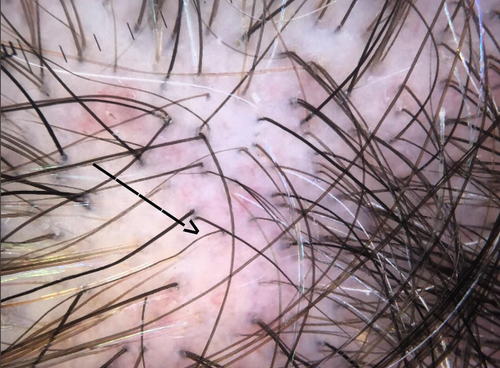
Diagnosing scarring alopecias in the earliest stages is more challenging because the appearance of the scalp may not look all that unusual. The photo here is from a patient with lichen planopilaris. There are subtle features like scalp erythema, pili torti and single hairs that might trigger one to think about scarring alopecia but the features are not specific. This photos could just as easily be from a patient with androgenetic alopecia and seborrheic dermatitis.
EARLY LICHEN PLANOPILARIS: FEATURES ARE NON SPECIFIC IN THIS PHOTO

EARLY LICHEN PLANOPILARIS: FEATURES ARE NON SPECIFIC IN THIS PHOTO

However, diagnosing scarring alopecia in the early stages is made a lot easier by carrying a simple rule: if there is even the slightest possibility that what a physician is looking at could be a scarring alopecia, then a biopsy should at least be considered.

Not everyone that has scalp itching has a scarring alopecia. There are dozens of causes of itching. Not everyone with itching needs a biopsy.

Not everyone that has excessive shedding and a red scalp has a scarring alopecia. In fact, most don’t. There are many causes of shedding and a red scalp. Not everyone with a red scalp and shedding needs a biopsy.


Patients with Multiple Symptoms May Need A Biopsy

Scarring alopecias (particularly the symptomatic ones like lichen planopilaris and folliculitis decalvans) are very often associated with symptoms and signs that signal to the patient and physician that something is not right. More times than not, these two diseases shout out clues to the patient and physician that something is not right. (In contrast frontal fibrosing alopecia can often be silent when it first develops and can go on for years without detection). For patients with lichen planopilaris and folliculitis decalvans there are often multiple clues that this is not indeed the diagnosis. The scalp sometimes itches in unusual patterns. The scalp might burn. The scalp is sometimes sore. The scalp feels bruised for some patients. The scalp is warm for many. Shedding occurs when there is otherwise no good reason.
Patients who report several symptoms (“more than itching”) often benefit tremendously from having a scalp biopsy. For example, a patient with scalp itching PLUS burning or a patient with itching PLUS scalp tenderness should at least be given consideration for a scalp biopsy.
- See more at: https://donovanmedical.com
 
B

Bunty81

member
Something else of note would be the side by side comparisons of photos taken at day 9 (post scab removal) and at 8 months. I have darkened the day 9 image so you can see the grafts more clearly -

day 10_large_marked.png
8 months_large.png


I've drawn a faint line around the areas that appear to be exhibiting growth after just 9 days, which happens to be the more densely packed areas and likely the areas that were worked on first. The rest of the transplanted area just seems to be populated with more sparsely spread black dots which are not showing the same amount of growth as the marked areas.

As you can see, it is pretty much an exact outline of what remains today (especially the angled area on the right hand side).

It surely can't be coincidence that the areas they paid the most attention to just so happen to be the only areas that exhibited any growth several months later?

EDIT - My theory is that a not insignificant amount of the grafts may have been transected. If so they would likely have used these to populate the back areas after using the good grafts in the hairline area. Coupled with the fact that these grafts were out in the open for the longest time (and likely just kept in a basic saline solution) and they were pretty much DOA.
 
Last edited:
Bigmac

Bigmac

Administrator
Staff member
Saline solution is fine to store the grafts. They are usually kept chilled to enhance the survivability.
Was it a separate person that placed your hairline?
After surgery did all the grafts shed in the hairline?
 
Top