Dr. Josephitis
Valued member
FUE has become more prevalent over the past few years. There are many good reasons for this including the increase in the number of high quality results. Although, many clinics claim to do very large mega session FUE cases, at Shapiro Medical we have stayed cautious and conservative with our large FUE cases. As we all know, the SAFE donor zone is a defined area and venturing out of that area will indeed give more grafts, albeit grafts that may not last a lifetime. At our clinic, an average large FUE case is 2400-2700 grafts. This type of FUE will also typically take 2 days as we do not like to put additional stress on the patient as well as the grafts by doing it all in one day.
I wanted to briefly present a recent case of ours done at SMG where we increased our overall number of grafts by adding beard as donor hair. Typically beard hair has been used as a donor when all of the scalp donor has been depleted. This has been for good reason as beard hair is typically only one or two haired grafts. Also, the characteristics of beard are not the same as scalp. Finally, although beard grafts grow well when transplanted, they typically have a lower yield (growth rate) than scalp donor.
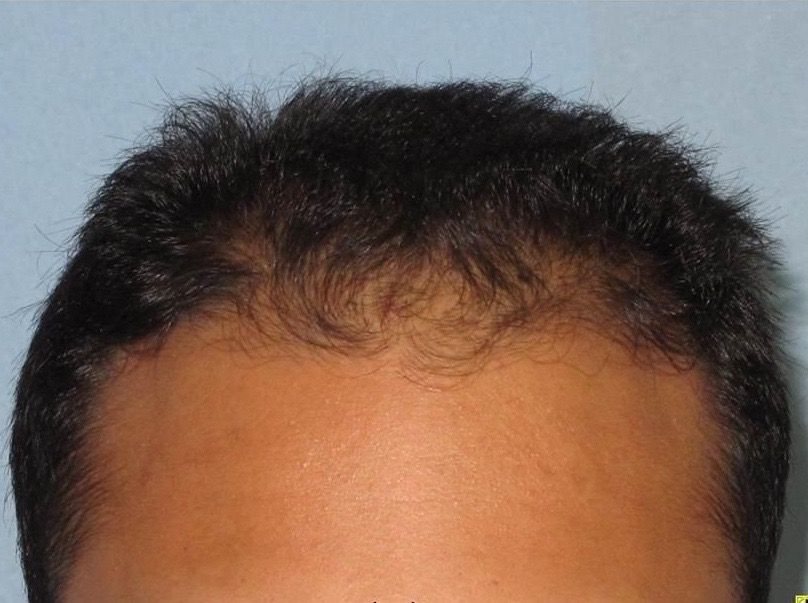
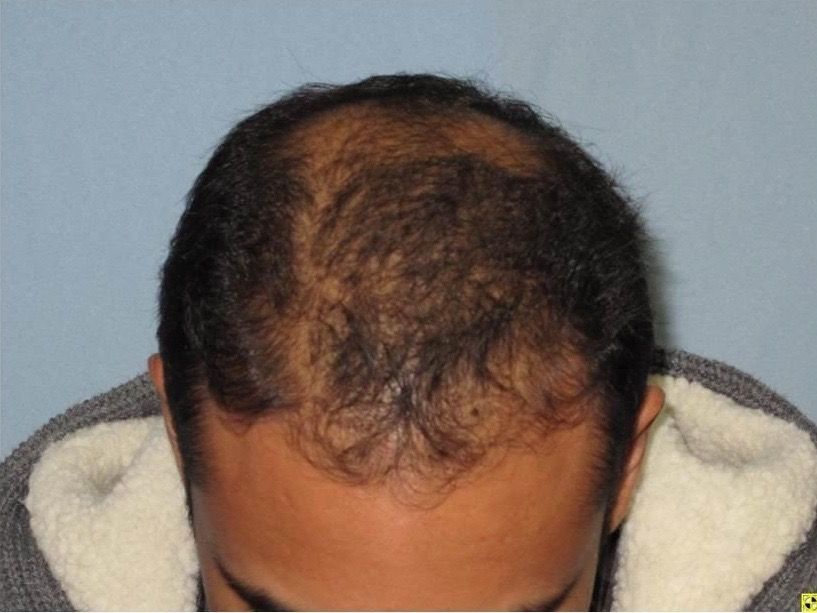
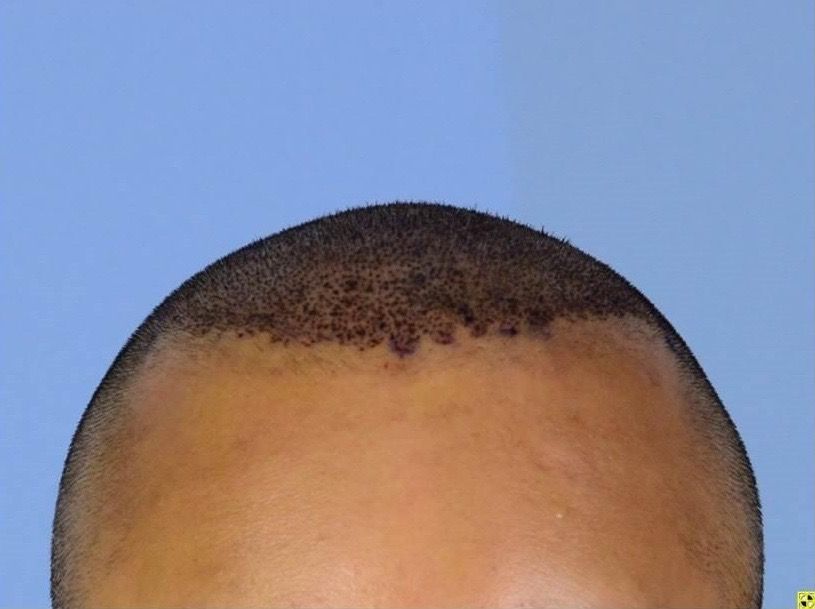
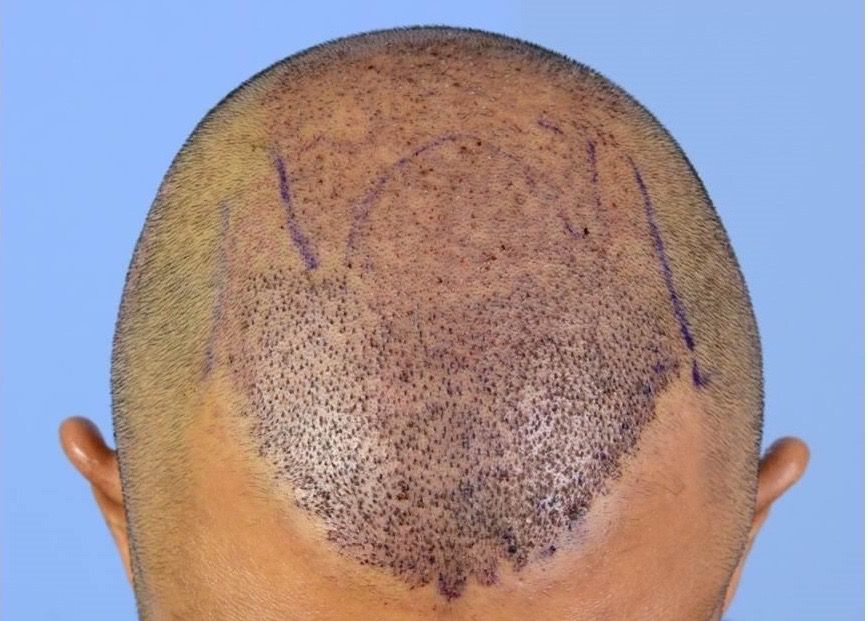
This patient was a 28 y.o. male with a 5+ year history of hair loss. He has not yet started preventative meds. He was a Norwood 4 with a donor density of 68 FU/cm2. This patient wanted as much covered in one session as possible. With his lower density and the patient choosing FUE over FUT (FUT can often get more grafts on the first pass) we looked for additional areas of donor in this patient. Beard was the likely choice. Risk of scarring or hypopigmentation, although still a risk, is not common in the beard. Also, the beard that was used was under the chin, so it is less visible. Because of the increased number of grafts, the patient came into the office for a total of 3 days. The first day was relatively short as only the incisions were made in the scalp. Day 2 and 3 consisted of FUE extraction of the scalp and beard. All the grafts that were extracted each day were transplanted on the same day. We ended up extracting 2600 from the scalp and 499 from the beard for a total of 3099 grafts.
These are the pre and post op photos.
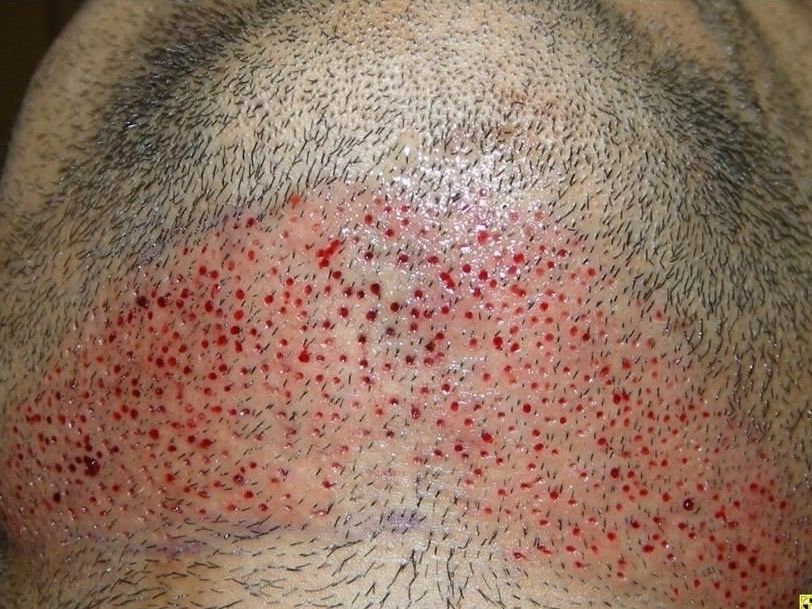
This is the post op view of the beard area.
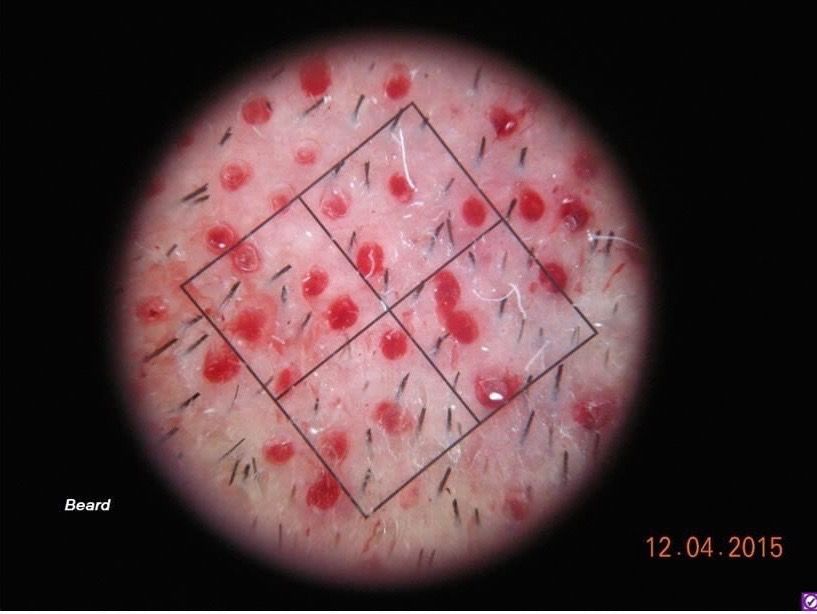
This is a close up of the beard after extractions. The scalp donor delivered a somewhat average distribution of grafts. The beard gave 400 single hairs and 99 double hair grafts. Thankfully, beard hairs are typically thicker than scalp hair so they do help with density. Also, the beard grafts were only placed in the midscalp and used for added density. Beard should not be used in the hairline or other areas that are readily visible.
I wanted to briefly present a recent case of ours done at SMG where we increased our overall number of grafts by adding beard as donor hair. Typically beard hair has been used as a donor when all of the scalp donor has been depleted. This has been for good reason as beard hair is typically only one or two haired grafts. Also, the characteristics of beard are not the same as scalp. Finally, although beard grafts grow well when transplanted, they typically have a lower yield (growth rate) than scalp donor.
This patient was a 28 y.o. male with a 5+ year history of hair loss. He has not yet started preventative meds. He was a Norwood 4 with a donor density of 68 FU/cm2. This patient wanted as much covered in one session as possible. With his lower density and the patient choosing FUE over FUT (FUT can often get more grafts on the first pass) we looked for additional areas of donor in this patient. Beard was the likely choice. Risk of scarring or hypopigmentation, although still a risk, is not common in the beard. Also, the beard that was used was under the chin, so it is less visible. Because of the increased number of grafts, the patient came into the office for a total of 3 days. The first day was relatively short as only the incisions were made in the scalp. Day 2 and 3 consisted of FUE extraction of the scalp and beard. All the grafts that were extracted each day were transplanted on the same day. We ended up extracting 2600 from the scalp and 499 from the beard for a total of 3099 grafts.
These are the pre and post op photos.
This is the post op view of the beard area.
This is a close up of the beard after extractions. The scalp donor delivered a somewhat average distribution of grafts. The beard gave 400 single hairs and 99 double hair grafts. Thankfully, beard hairs are typically thicker than scalp hair so they do help with density. Also, the beard grafts were only placed in the midscalp and used for added density. Beard should not be used in the hairline or other areas that are readily visible.