Understanding Hair
Valued member
As with male pattern hair loss, genetics is a common cause of female hair loss. However, from there is where male and female hair growth, hair loss, and hairlines similarities begin to differ. For instance, a doctor is more likely to request a blood test for female hair loss, as the hair loss causes are typically more varied.
Hair growth characteristics come from ethnicity; the genre may dictate certain natural traits, such as the hairline position, and design. No hairline is perfectly symmetrical, with subtle differences. A female hairline is more likely to remain with an even, high density, which helps to define the framing of the face, whereas a male hairline, even with a minimal recession is more likely to lose definition with age.
A fundamental difference between male and female hairlines is the shape, in fact, in most cases they are opposite. Simplistically, the male hairline apex, the midway point of the hairline is the lowest point, commonly called the central forelock, whereas a female centre of the hairline, the apex is the highest point.
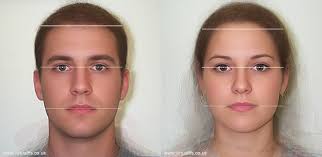 The common female hairline shape is concave (∩). As a result, the hairline features a downward curve from the highest centre point of the hairline. The inward-sloping shape continues down each side, often characterised by a rounded, closed frontotemporal angle. While the female hairline shape can vary, in line with facial bone structure, can loosely resemble a male hairline, even though there is minimal or no temporal recession.
In contrast an adult male hairline is typically convex (U), from side to side. high to low (apex), then high again. The shape of the male hairline resembles an “M,” the lowest point being the forelock, moving up to the temple point or recession, before moving back down to the lateral, which blends into the side burn. This shape can be naturally more pronounced for instance with a widow´s peak. With the advent of hair loss, it will accentuate the depth of the temple recession, including the height and definition of the forelock.
The common female hair loss pattern, the hairline remains intact, however behind, the natural parting becomes wider with diffuse hair thinning. While the thinning can remain isolated to small area, occasionally the diffuse thinning can affect the entire top of the scalp. The Ludwig classification depicts minor to major thinning patterns. This opposes the common male hair loss pattern, which starts with a receding hairline or crown, with the hair loss pattern continuing through the frontal, mid-scalp, and crown. As a result, leaving a clear and defined area between the areas of hair with little to no hair growth over the top of the head.
Male or female hairline restoration, there must be a general adherent to natural parameters. Ideally following the facial bone structure regardless of gender. The hair/graft distribution can alter with gender and hair characteristics. For instance, it´s more acceptable for a female hairline to have a defined hard edge to the hairline. However, a male hairline needs a jagged edge along the front of the hairline. This irregular edge will ensure a natural framing the face. While a female hairline often will not require the irregular edge and look perfectly natural.
Trying to cheat nature and reverse the natural order will result in the unnatural framing of the face and not compliment the facial bone structure. The hairline even subconsciously becomes the unwanted focus. For instance, designing a male hairline and wanting to aggressively round down the temples, often at the same or lower than the central forelock. Even from puberty through adolescence it´s very unlikely this would naturally occur. As we only age, a hairline must reflect this, be it the shape and definition taking into consideration the pattern of existing hair growth.
Hair growth characteristics come from ethnicity; the genre may dictate certain natural traits, such as the hairline position, and design. No hairline is perfectly symmetrical, with subtle differences. A female hairline is more likely to remain with an even, high density, which helps to define the framing of the face, whereas a male hairline, even with a minimal recession is more likely to lose definition with age.
A fundamental difference between male and female hairlines is the shape, in fact, in most cases they are opposite. Simplistically, the male hairline apex, the midway point of the hairline is the lowest point, commonly called the central forelock, whereas a female centre of the hairline, the apex is the highest point.
In contrast an adult male hairline is typically convex (U), from side to side. high to low (apex), then high again. The shape of the male hairline resembles an “M,” the lowest point being the forelock, moving up to the temple point or recession, before moving back down to the lateral, which blends into the side burn. This shape can be naturally more pronounced for instance with a widow´s peak. With the advent of hair loss, it will accentuate the depth of the temple recession, including the height and definition of the forelock.
The common female hair loss pattern, the hairline remains intact, however behind, the natural parting becomes wider with diffuse hair thinning. While the thinning can remain isolated to small area, occasionally the diffuse thinning can affect the entire top of the scalp. The Ludwig classification depicts minor to major thinning patterns. This opposes the common male hair loss pattern, which starts with a receding hairline or crown, with the hair loss pattern continuing through the frontal, mid-scalp, and crown. As a result, leaving a clear and defined area between the areas of hair with little to no hair growth over the top of the head.
Male or female hairline restoration, there must be a general adherent to natural parameters. Ideally following the facial bone structure regardless of gender. The hair/graft distribution can alter with gender and hair characteristics. For instance, it´s more acceptable for a female hairline to have a defined hard edge to the hairline. However, a male hairline needs a jagged edge along the front of the hairline. This irregular edge will ensure a natural framing the face. While a female hairline often will not require the irregular edge and look perfectly natural.
Trying to cheat nature and reverse the natural order will result in the unnatural framing of the face and not compliment the facial bone structure. The hairline even subconsciously becomes the unwanted focus. For instance, designing a male hairline and wanting to aggressively round down the temples, often at the same or lower than the central forelock. Even from puberty through adolescence it´s very unlikely this would naturally occur. As we only age, a hairline must reflect this, be it the shape and definition taking into consideration the pattern of existing hair growth.